What it is
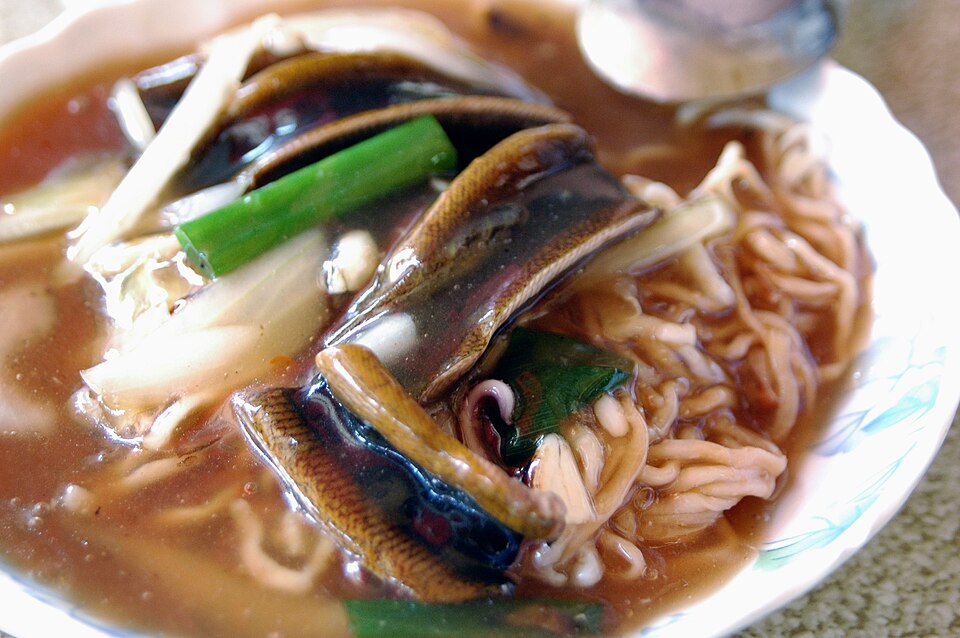
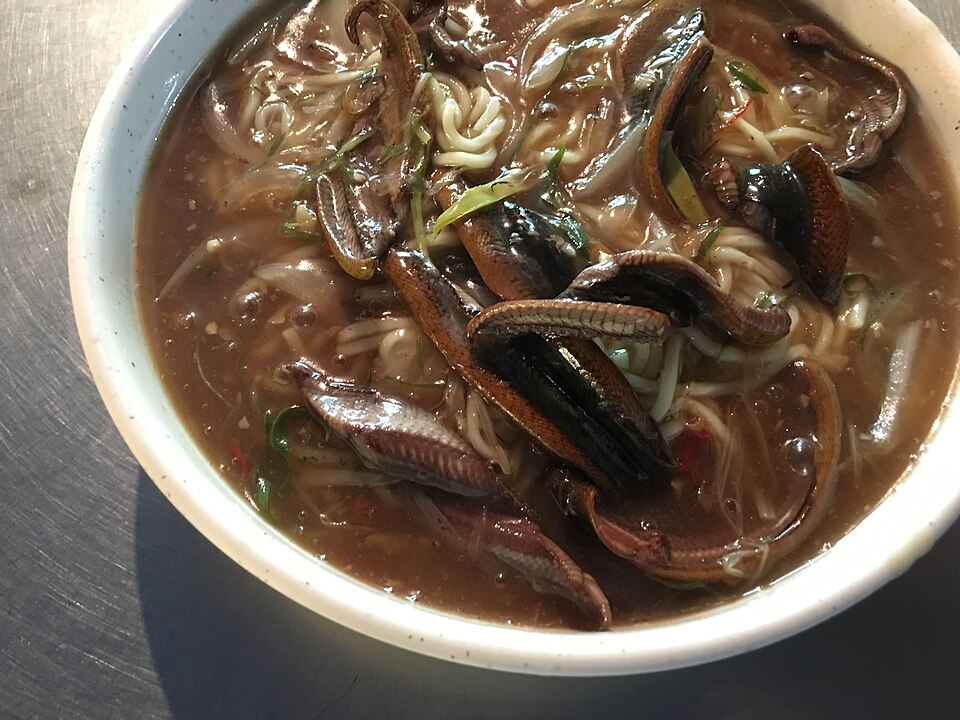
Eel noodles (鱔魚意麵) pair strips of freshwater eel, stir-fried until crisp, with yi mein (意麵), springy egg noodles that are fried and dried in advance. The sauce leans sweet and sour. Shops often pile the dried noodle cakes by the stove, and the dish turns up at night markets and Taiwanese restaurants across the island.
Where it came from
The dish is most closely tied to Tainan, though no record shows who first cooked it. Local lore credits Liao Ping-nan (廖炳南), nicknamed "Eel Liao", with making the city's fried eel popular, but that is hearsay rather than history. His youngest son began helping him at 14 and now runs A Yuan Eel (阿源鱔魚店) with his own son. Firmer ground is the age of the city's eel specialists. Eastern Castle opened in 1970, Jin Fu in 1972, and Fu Sheng (福昇小食) in Yongle Market has traded for more than 50 years.
How it is made
The eel is cleaned and cut into strips. Freshness matters, as badly handled eel tastes muddy. Cooks use a very hot wok so the eel picks up a smoky edge, often with onion, cabbage and spring onion. For the saucy style (勾芡), cooked eel and noodles go into the wok together with starch, black vinegar and sugar, giving a glossy, thickened sauce. For the dry-fried style (乾炒), the noodles are cooked separately and the eel, often seasoned with sugar, soy sauce and lard, is tossed through them.
How to eat it
Order by style: saucy or dry-fried, and over noodles or as plain fried eel (炒鱔魚). Several well-known eel shops and stalls trade late into the night. Many also cook cuttlefish and pork kidney in sesame oil, which make good side orders.
Around Taiwan
- Tainan
- Tainan is the dish's home, and its long-running eel shops sit on central streets and in markets. The sauce here tends to be on the sweet side, and shops usually offer both the saucy and dry-fried styles.
- Kaohsiung
- In Liuhe Night Market, a stall opened about 40 years ago by a couple from Jiali in Tainan made its sauce more sour than the sweeter Tainan style. Diners can take the eel over yi mein or yellow oil noodles (油麵), which come in a bigger portion.