What it is
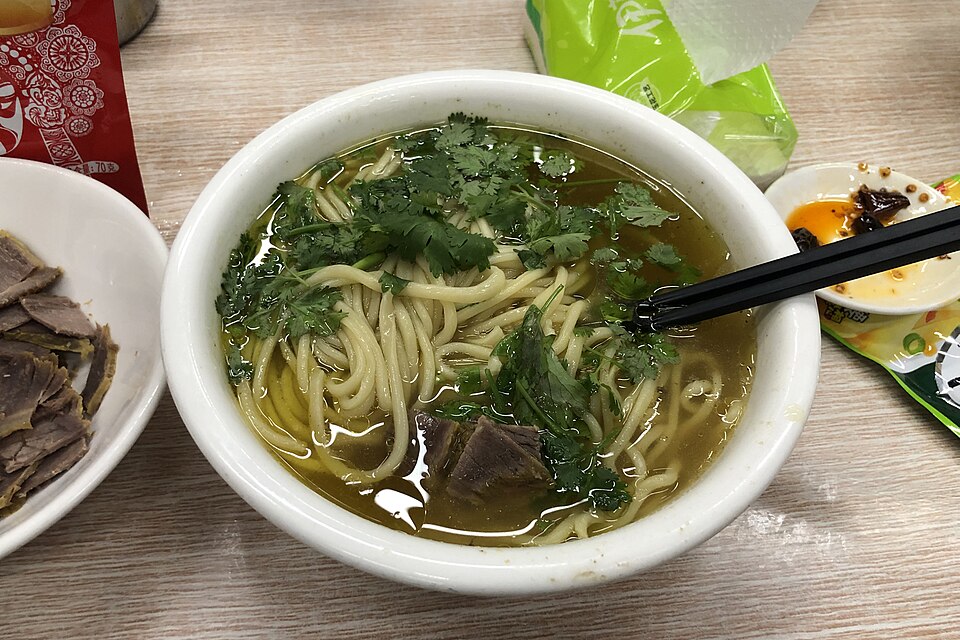
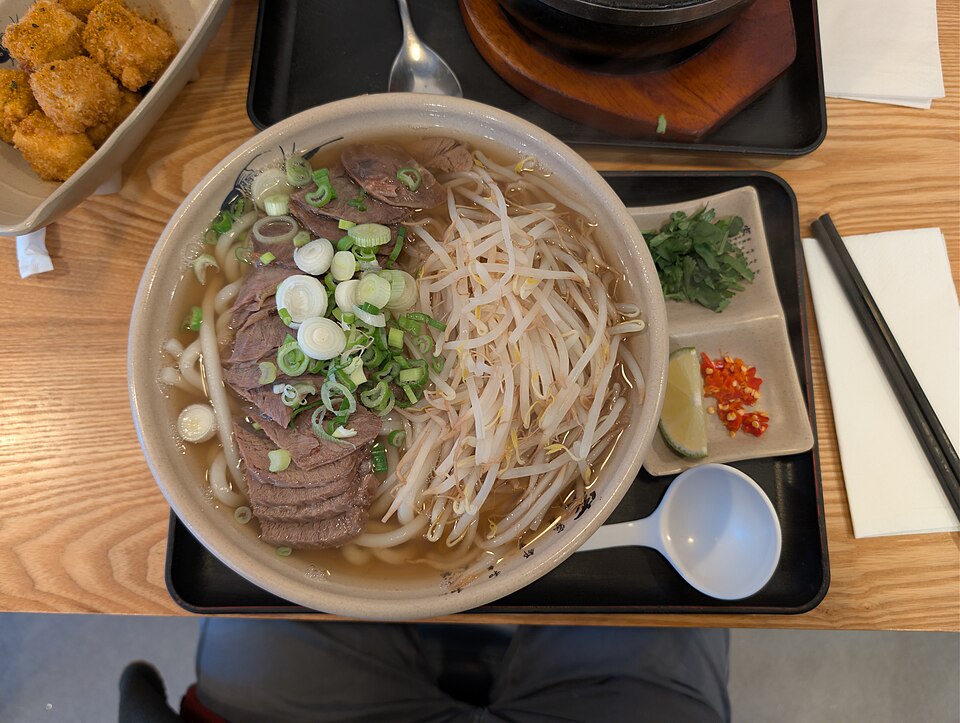
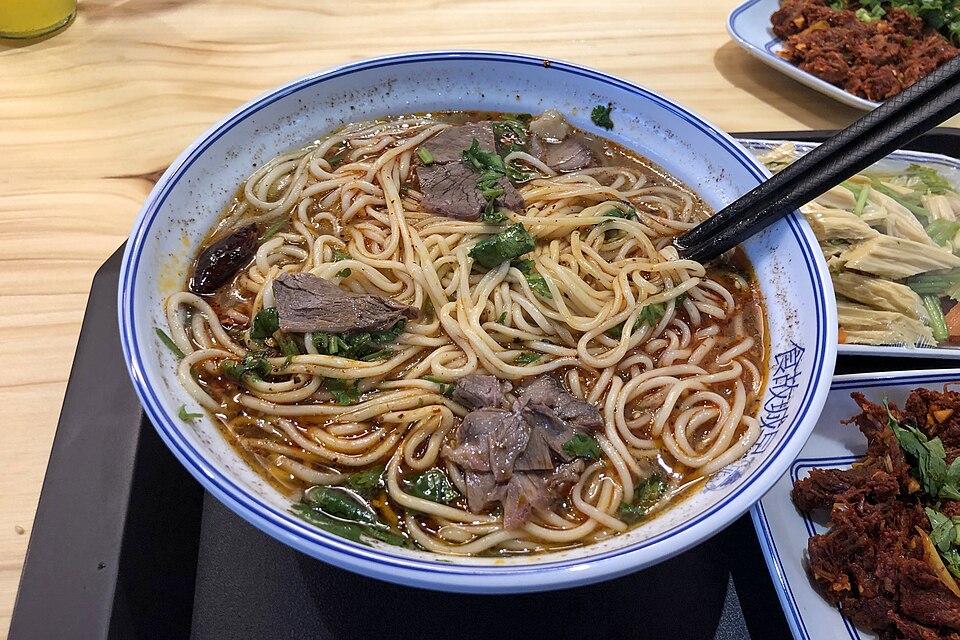
Beef noodle soup (牛肉麵) is a bowl of wheat noodles, stewed beef and broth. The standard style is red-braised (紅燒, hong shao): a dark, soy-based broth with spices and chilli bean paste. Clear-stewed (清燉, qing dun) uses no soy sauce, and a tomato version is also common. Most bowls come with pickled mustard greens (suan cai) and spring onion.
Where it came from
Beef was not everyday food in farming Taiwan, where cattle pulled the ploughs and many families would not eat them. That changed after 1949, when large numbers of Nationalist soldiers settled on the island. American aid from 1951, including flour, helped noodles catch on, and beef eating spread outward from the military dependents' villages (眷村, juancun).
Where the red-braised bowl began is disputed. Its other name in Taiwan, Sichuan beef noodles (川味牛肉麵), points to Sichuanese veterans, though Sichuan has its own, different beef noodle soups. The food historian Lu Yao-tung (逯耀東) argued it was a Taiwanese invention, perhaps from the villages of Gangshan (岡山) in Kaohsiung. The Air Force Academy has been based there since 1949, and many of its families were Sichuanese. Spicy bean paste, the key seasoning, appears to have been first made for sale in Gangshan by Liu Ming-teh, an air force clerk who had learnt sauce-making in Sichuan during the war. Other accounts credit Shandong veterans selling offal stew with noodles near stations, or American army canned beef.
The clear-stewed style is said to descend from Lanzhou noodles brought by Hui Muslim soldiers. Taipei's beef noodle festival, first held in 2005, pushed shops towards better ingredients and more refined cooking.
How it is made
Beef bones, sometimes with marrow or offal, are simmered for hours into stock; some shops keep it going for more than a day. For the red-braised style, the beef is blanched, then fried with spring onion, ginger, star anise and chilli bean paste (豆瓣醬, doubanjiang) before braising in the soy broth. Shank, brisket and chuck are usual, often mixed with tendon in 'half tendon, half meat' (半筋半肉) bowls. Wide or knife-cut noodles hold more soup; thin noodles are smoother.
How to eat it
A lunch or dinner dish. Pickled mustard greens are the usual extra, added to taste. Some shops also serve the noodles dry, tossed in sauce (拌麵, banmian). Cold sides such as braised dried tofu and seaweed are common additions to the order.
Around Taiwan
- Kaohsiung
- Kaohsiung's claim rests on Gangshan, where Sichuanese air force families settled and spicy bean paste became a local product. Zuoying, at the heart of the city's navy villages, has many of its best-known beef noodle shops.
- North
- Taipei's beef noodle festival, launched in 2005, has judged cooks in red-braised, clear-stewed and creative categories. The city's promotional writing for the festival has backed the Gangshan origin theory.