What it is
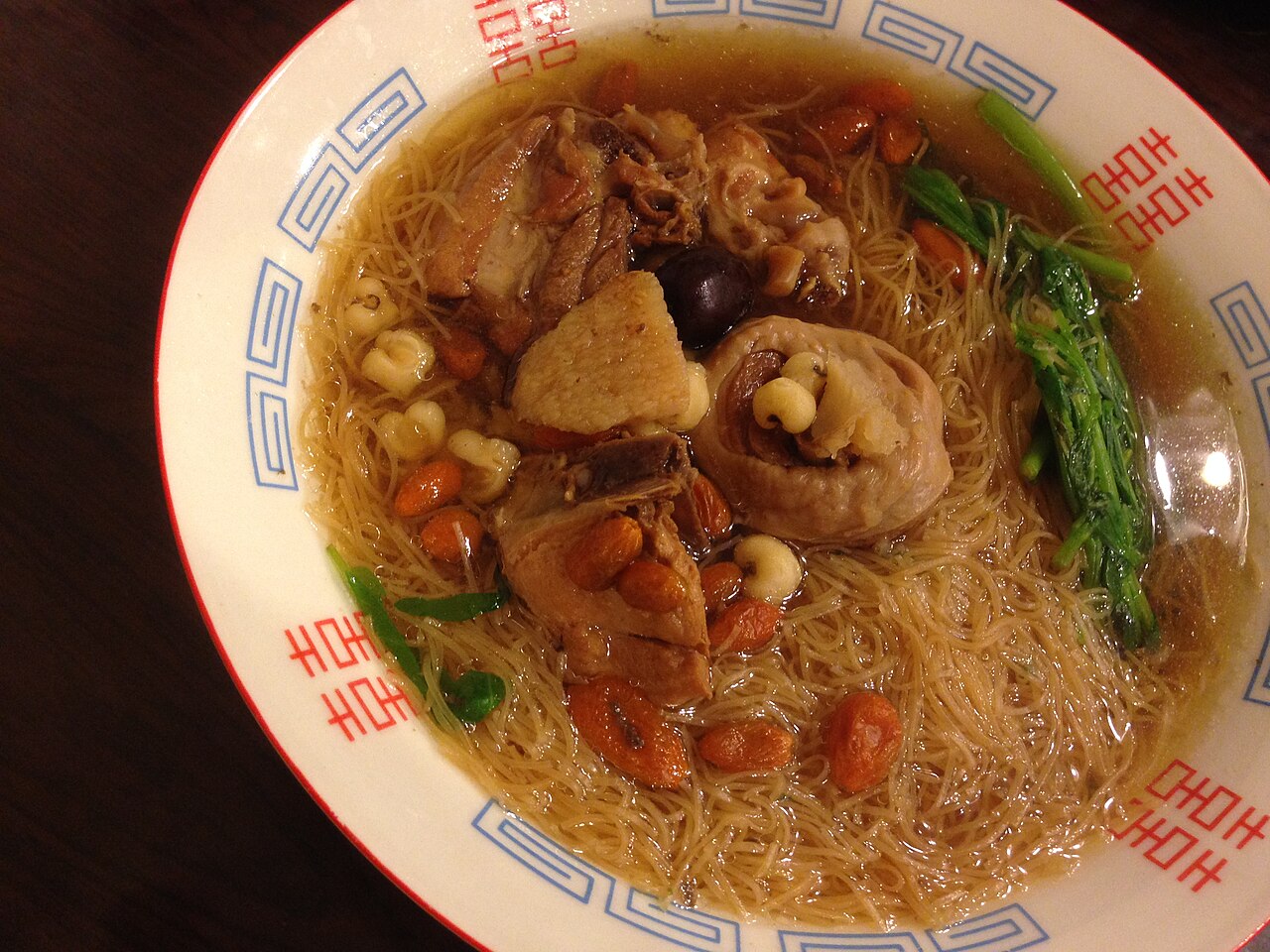
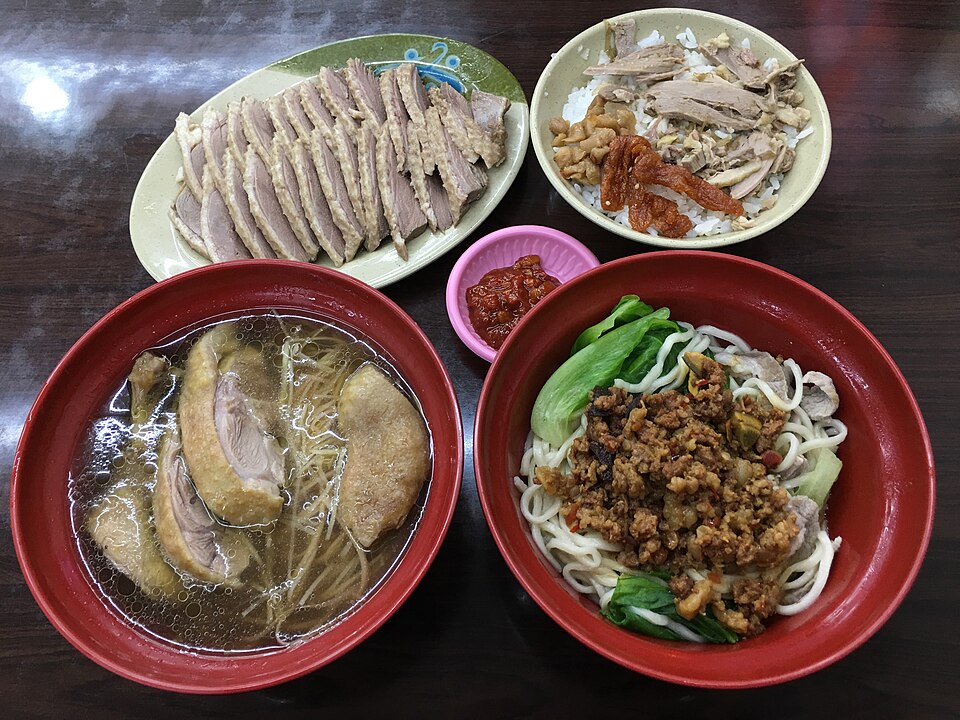
Angelica duck (當歸鴨) is duck cooked in a herbal broth led by dang gui, the root of Chinese angelica. The soup is amber, mellow and faintly bitter, with a long finish. It is usually served with fine noodles as angelica duck noodles (當歸鴨麵線). It counts as a tonic dish in Taiwan.
Where it came from
The soup belongs to Taiwan's habit of tonic eating (進補). As autumn turns to winter, many people eat warming dishes such as angelica duck, ginger duck and sesame oil chicken, and some believe they build strength for the year ahead. In Chinese medicine angelica is warm and is used to nourish the blood, and the soup is often seen as a tonic for women in poor health. In Tainan the best-known shop, San Hao Yi Kung Tao (三好一公道當歸鴨), started around 1949 as a stall at the Dongmen roundabout.
How it is made
Duck is simmered with a mix of Chinese herbs. Angelica leads, and recipes may add chuanxiong, cooked rehmannia, cinnamon twig, astragalus, codonopsis, liquorice, red dates and goji berries, seasoned with old ginger, rice wine and salt. Some shops use thirty or more herbs, and some change the mix between summer and winter. Shops prize fresh, unchilled duck, stewed until the meat is tender.
How to eat it
Order it with noodles (當歸鴨麵線) for a one-bowl meal, or as a soup beside duck rice. Duck leg (鴨腿) is a popular cut. Some stalls also sell duck offal and a rice cake made with duck blood (米血). It is thought of as winter food, but shops serve it all year.
Around Taiwan
- Tainan
- San Hao Yi Kung Tao moved from the Dongmen roundabout to Fuqian Road in the 1960s. It uses fresh duck bought daily and red noodles (紅麵線) in a broth of angelica and liquorice. In Yamuliao Market (鴨母寮市場), Dang Gui Ya No. 1 (當歸鴨1號) uses Kaohsiung duck killed each morning.
- Kaohsiung
- Hou Chi Duck Rice (侯記鴨肉飯), open for four decades, serves dang gui duck soup alongside its sliced duck rice. Adding noodles turns the soup into a full meal.