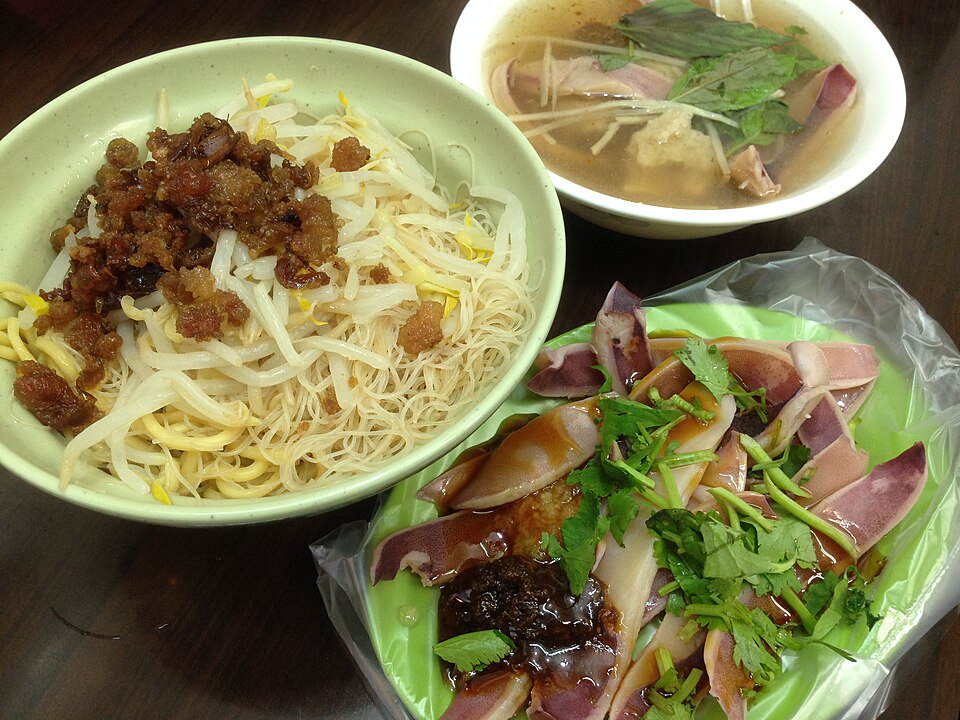
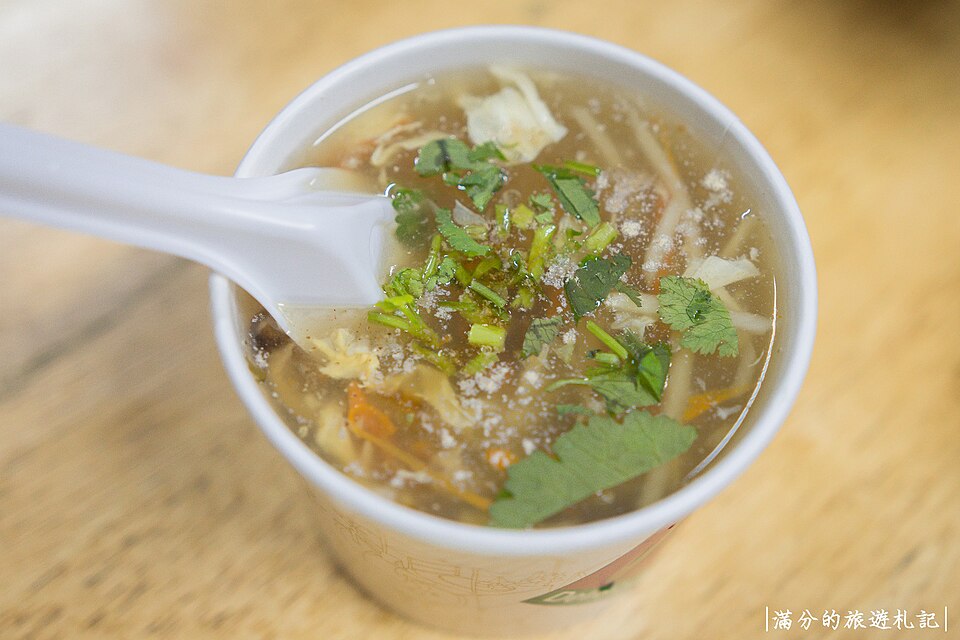
What it is
Rou geng (肉羹) is a soup thickened with starch, holding chewy pieces of pork bound with fish paste. The broth usually carries bamboo shoot, cabbage and shiitake. It is one of the best-known thick soups (羹, geng) of Taiwan and Fujian, and a night-market staple. Shop signs often write the second character as 焿.
Where it came from
Geng is one of the oldest kinds of Chinese dish, and in Hokkien the word still means a soup made thick with starch. Pork geng is a shared tradition of Taiwan and Fujian. Early versions simply put shredded pork into the broth. A home method coated strips of lean pork in starch before cooking them, a style called 赤肉羹 (lean pork thick soup). As Taiwan grew richer, diners became fussier, the plain shredded version fell out of favour and cooks worked out recipes of their own. Most shops now mix the pork with fish paste and shape it into small pieces. Style also splits by region. Southern bowls, especially in Tainan, tend to be thick and sometimes sweetish, while shops in parts of the north thicken lightly.
How it is made
A common mix is about six parts lean pork, three parts fat and one part fish paste. The pork is minced, seasoned with salt, sugar, white pepper, sesame oil and fried shallots, and stirred until very sticky before the fish paste goes in. Small pieces are pinched off, boiled and lifted out. The broth gets shiitake, cabbage or bean sprouts, bamboo shoot, wood ear and dried shrimp. It is thickened with starch or beaten egg, and the pork goes back in.
How to eat it
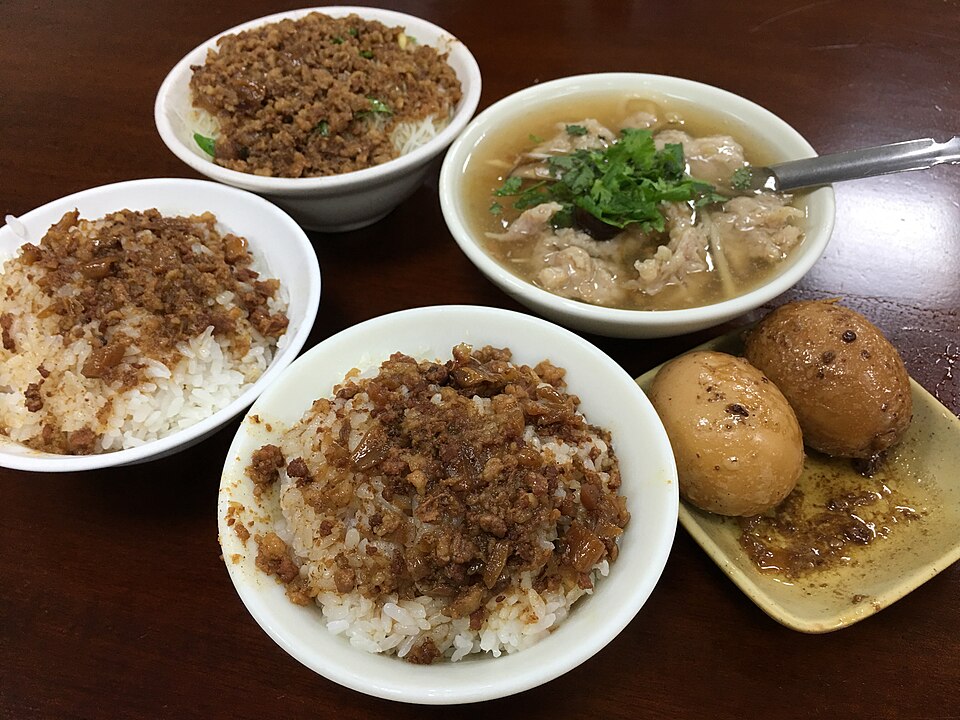
It is an everyday snack, eaten on its own or over noodles, rice noodles or flat rice noodles (粄條), and it often comes alongside braised pork rice. Ask for 肉羹麵 to get it with noodles. Garlic, black vinegar and soy sauce are the usual seasonings, and southern shops often add coriander and fried garlic.
Around Taiwan
- Tainan
- Tainan bowls are known for being thick and smooth, and some are sweet enough to surprise visitors from the north.
- Kaohsiung
- Huang's in Ciaotou serves it with braised pork rice, and Hsiu Ming in Cishan makes a mildly sweet shiitake version. On Cijin island, the Bu Yi Yang (不一樣) lean pork soup shops fry strips of pork before they go into the soup, so the meat stays crisp outside.
- North
- Shops in Hsinchu, Yilan and Keelung often serve a lighter soup, only thinly thickened, on a bonito or pork-bone broth. Taipei bowls are often made without sugar, relying on the bone stock for sweetness.
- Central
- Taichung's 大麵羹 shares the geng name but is a different snack, built on thick yellow noodles that look rather like udon.