What it is
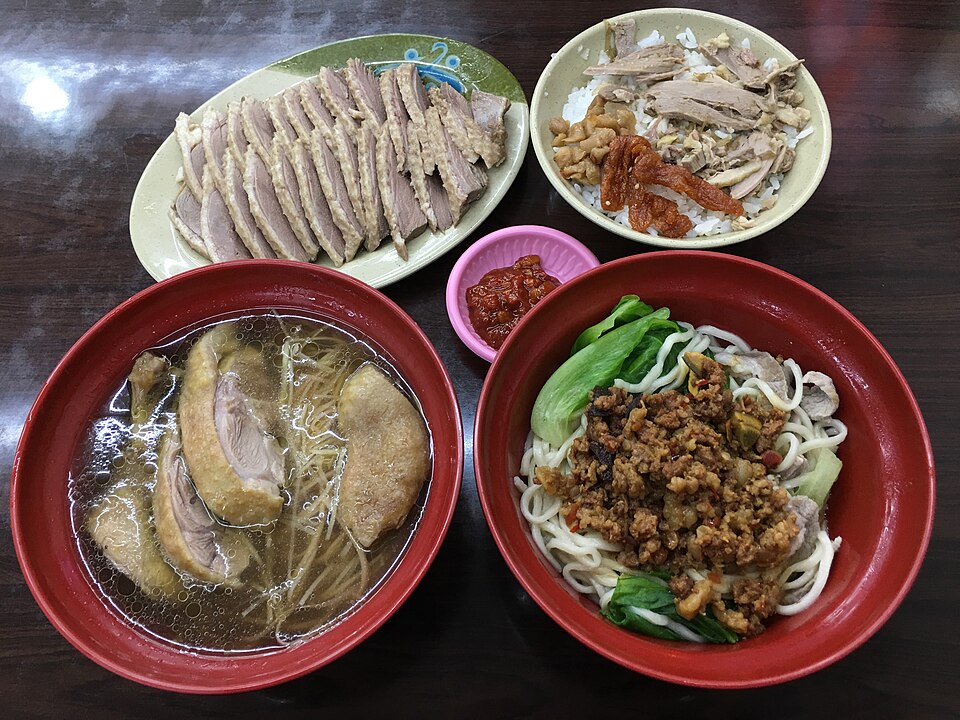
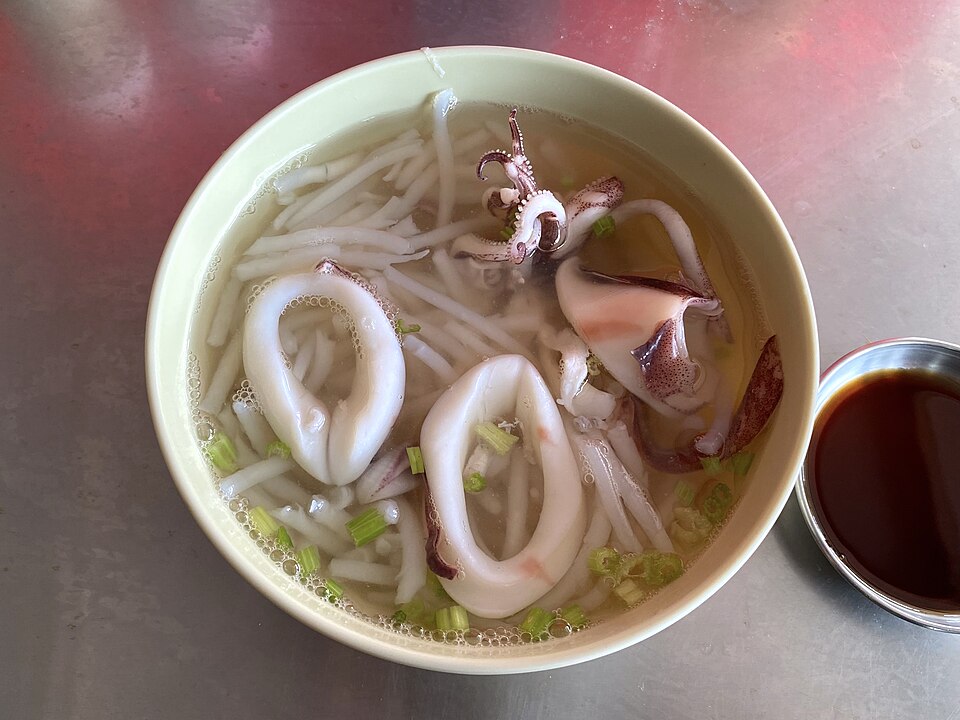
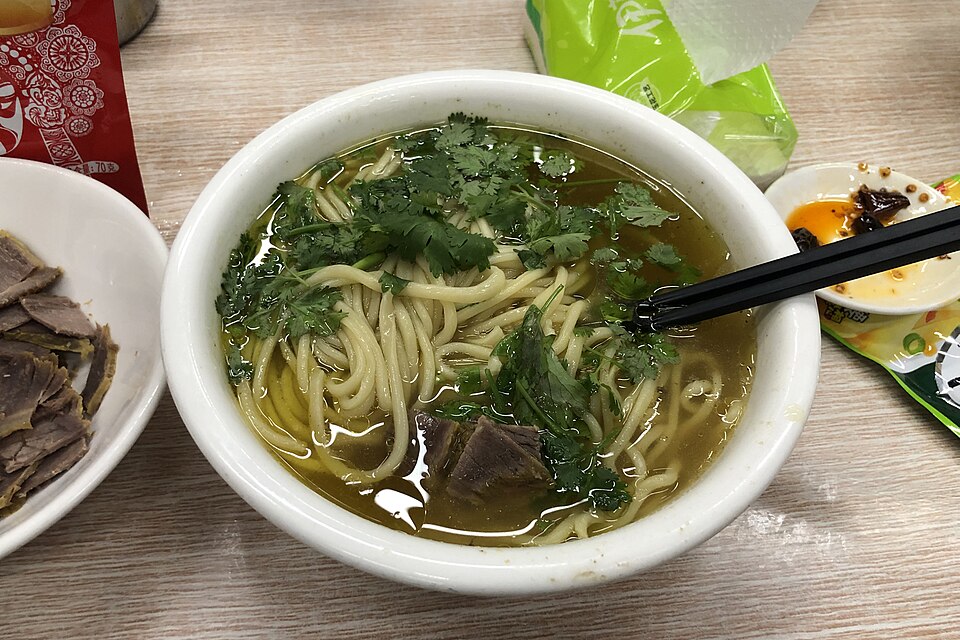
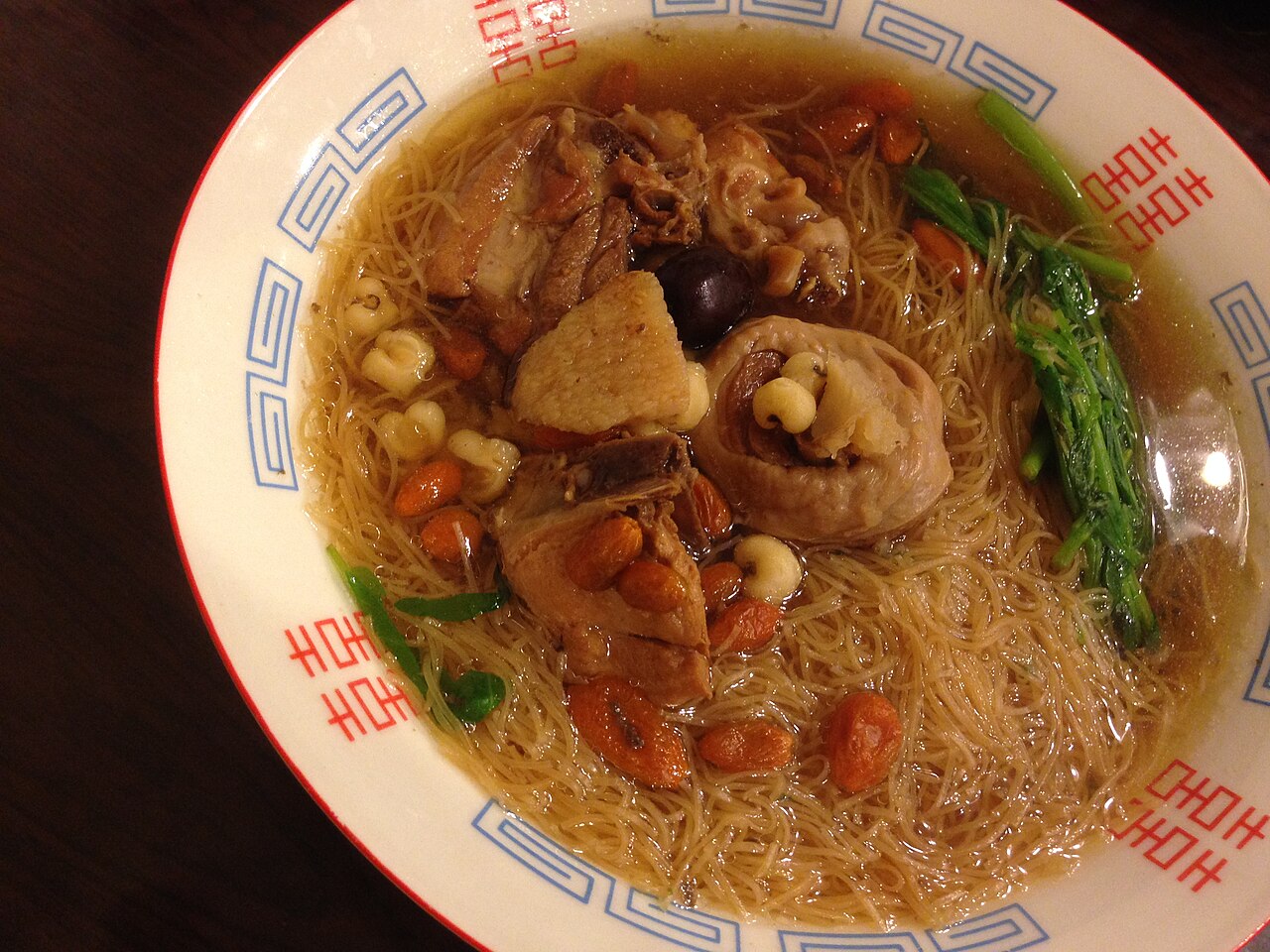
A plain noodle soup of yellow alkaline egg noodles, or rice noodles, in pork-bone broth. Bean sprouts and garlic chives go in, thin slices of pork go on top, and a little lard and fried shallots finish the bowl. It also comes dry, without soup. The common written name 切仔麵 ("cut noodles") is a sound-alike for the original 摵仔麵.
Where it came from
The proper name is 摵仔麵 (tshi̍k-á-mī). In Taiwanese, tshi̍k means to jerk a strainer up and down, and the old bamboo noodle strainer itself was called a 麵摵仔. Because the words sound alike, the dish came to be written 切仔麵, and northern Taiwan now uses that name.
Legend places its roots at Yonglian Temple (湧蓮寺) in Luzhou, now in New Taipei, a town once known as Heshangzhou (和尚洲). Local historian Yang Lien-fu (楊蓮福) says a vendor called Chou Wu-chu (周烏豬) sold the noodles in front of the temple before Japanese rule ended, though the war kept interrupting trade. His apprentice Yang Wan-pao (楊萬寶) opened his own stall there in 1946, using bones and whole pork belly for the broth and no MSG. Yang later handed the stall to his own apprentices, and Luzhou cooks set up stalls in nearby towns such as Wugu, Bali and Sanchong. The dish caught on more widely after the Republic of China government retreated to Taiwan in 1949. It is often called the basic pattern for Taiwan's snack noodles, and Tainan's danzai noodles are said to descend from it.
How it is made
The cook puts a portion of noodles in a long-handled strainer, dips it into boiling water or hot broth and jerks it up and down, traditionally about eight times. The shaking drains the water and keeps the noodles springy. The broth is built on pork bones and belly; some shops add an old hen or herbs. At Cheng's in Kaohsiung, pork heart, liver and tongue are blanched in the stock before a whole chicken goes in, with bamboo shoots in summer and white radish in winter.
How to eat it
Order the noodles first: egg noodles or rice noodles, with soup or dry. Then pick a few side plates from the counter, such as sliced pork, chicken, fish, pork heart, liver or diaphragm. These plates of blanched meat and offal, known as 黑白切, are as much the point as the noodles. Shared among a group, they turn a small bowl into a meal.
Around Taiwan
- Kaohsiung
- Cheng's Noodles (鄭家切仔麵) in Yancheng is run by the third generation of its family and serves side dishes on vintage floral porcelain. Accounts of its age range from more than 80 years to nearly a century.
- North
- Northern Taiwan claims the dish. Several Luzhou shops, such as Tianding (添丁) on Desheng Street, trace their line to Yang Wan-pao. In Taipei, Mai Mien Yen Tsai (賣麵炎仔) and A Kuo Noodles both won Michelin Bib Gourmand awards for their versions in 2020.