What it is
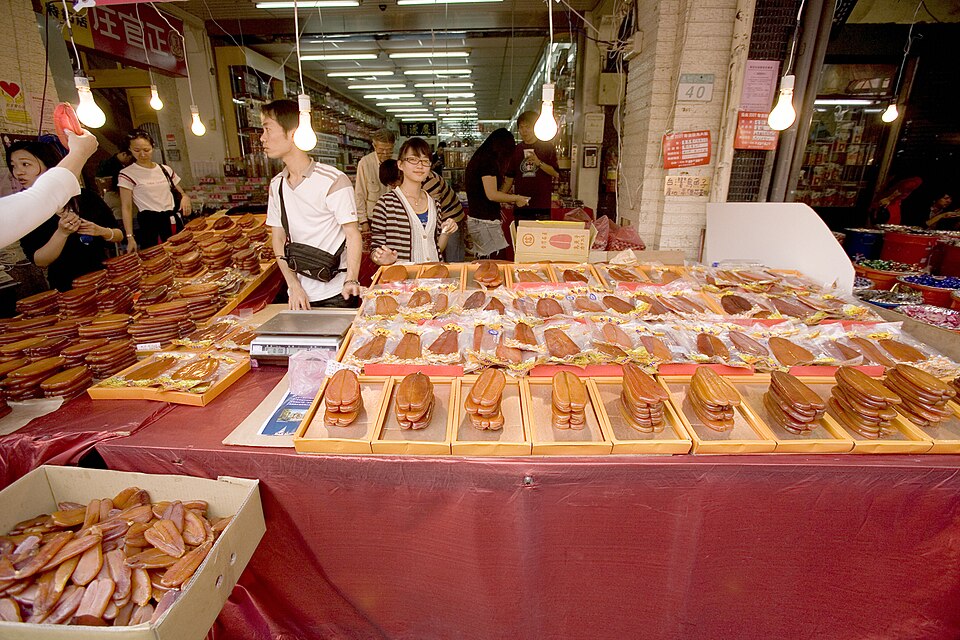
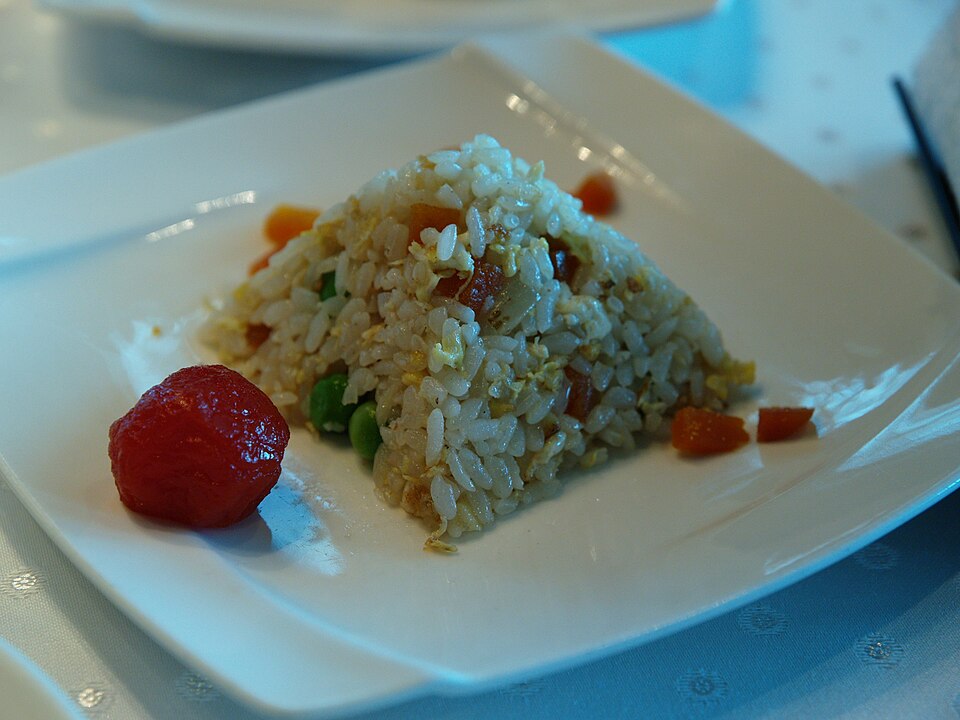
Mullet roe fried rice (烏魚子炒飯) is fried rice mixed with diced wuyuzi (烏魚子), the salted, dried roe sacs of grey mullet. Wuyuzi is Taiwan's counterpart to Japanese karasumi and Mediterranean bottarga, though usually softer. Through the rice it gives small, salty, savoury bursts.
Where it came from
Grey mullet reach Taiwan each winter, swimming south from the Chinese coast to spawn off the south-west. The local season centres on the winter solstice. Because the fish turned up so dependably, locals called it xinyu (信魚), 'reliable fish'. Han Chinese were already catching mullet here under Dutch and then Qing rule.
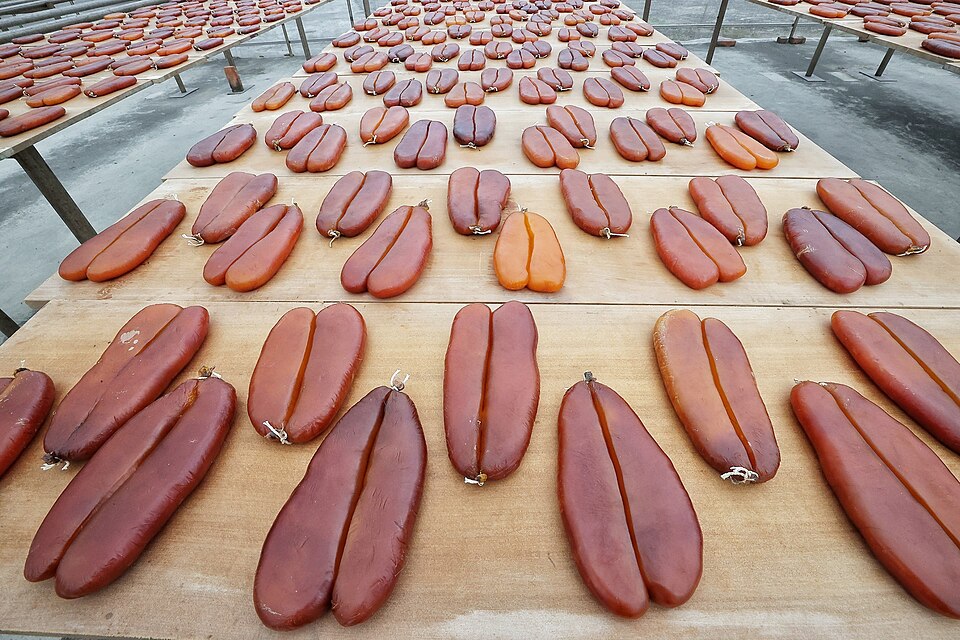
Roe-making as an industry came with Japan. Food culture researcher Lee Nai-hao (李廼澔) writes that in 1909 the Japanese brought a specialist from Nagasaki to Lukang (鹿港) to teach the method and set up a processing plant, described as Taiwan's first. In Nagasaki, karasumi had been made from mullet roe since 1675. In Taiwan the roe became known as 'black gold' (烏金) and a Lunar New Year delicacy.
Wild catches fell from the 1990s. Long-term fishing along the migration route, coastal pollution and warmer seas are all blamed. Much roe is now made from pond-farmed mullet or imported from Brazil, the United States, Australia and mainland China. In Japan, too, karasumi goes into fried rice.
How it is made
Female mullet are cut open and the paired roe sacs removed and rinsed. They are packed in salt, about 10 to 15 per cent of their weight, and pressed under boards for several hours to draw out water. The leftover salt is washed off, then the sacs are shaped and dried in sun and shade for several days to a week, or in drying machines. For fried rice, the finished roe is diced small and tossed through hot rice in the wok.
How to eat it
At seafood restaurants the fried rice is shared alongside fish, clams and vegetables. Whole roe is a New Year treat. The traditional way is to prick it, soak it in rice wine or kaoliang, strip the thin skin, then grill or pan-fry it briefly. It is sliced thin and eaten with garlic shoots or white radish, and lately apple or Asian pear.
Around Taiwan
- Tainan
- At Black-faced Spoonbill Canteen (黑琵食堂), among fish ponds in Cigu, nearly every table orders a plate of mullet roe fried rice.
- Kaohsiung
- Qieding (茄萣) on the Kaohsiung coast has around a century of mullet fishing behind it, and roe is cured there each winter. Xingda Harbour (興達港) holds an evening fish market.
- Central
- Lukang (鹿港) in Changhua is where, in 1909, a specialist from Nagasaki taught local roe processing.