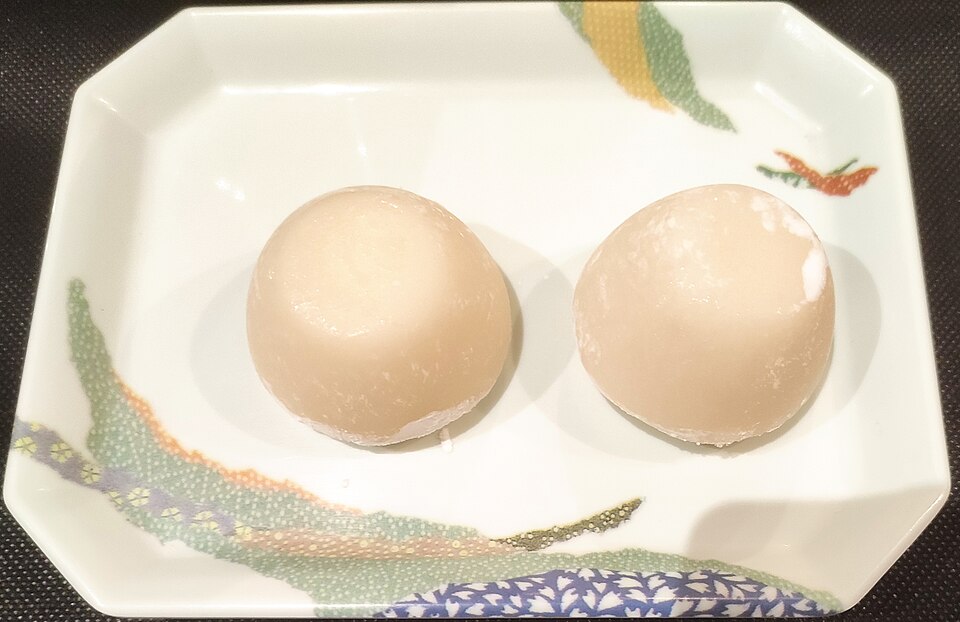
What it is
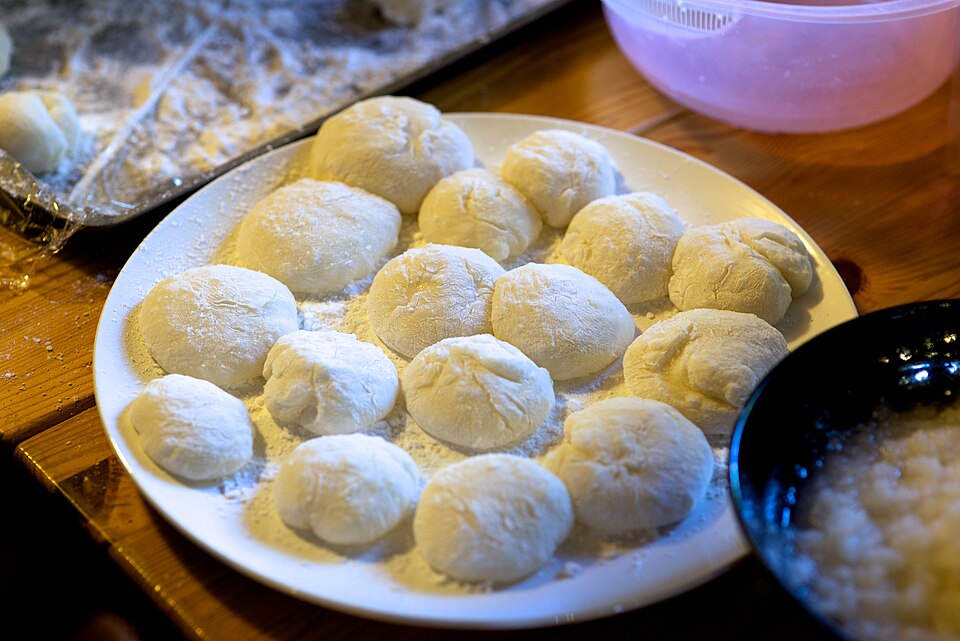
Mochi (麻糬) is cooked glutinous rice worked into a smooth, stretchy dough. Plain pieces are rolled in peanut or sesame powder. Filled ones, close to Japanese daifuku, hold red bean, peanut, sesame or taro paste, or fresh fruit such as strawberry or mango. Dessert shops also serve warm mochi (燒麻糬).
Where it came from
Glutinous rice cakes are a traditional snack across southern China, Taiwan, Japan and Korea, and Taiwan's names reflect that mix. In Taiwanese Hokkien it is môa-chî (麻糍). Hakka speakers call it 粢粑. The Amis of the east coast have their own version, 都倫.
Hualien made mochi its signature souvenir, from two roots, one Hakka and one Amis. Tseng Shui-kang (曾水港), a Hakka migrant, started out selling handmade mochi from a bicycle. Glutinous rice cakes had been food for birthdays and weddings; he filled his with red bean, and his daughter and son-in-law later built the Tseng Chi (曾記) brand. A second firm, A-Mei Mochi (阿美麻糬), drew on the Amis cake and on millet. After the war, better railways and roads brought tourists to Hualien, and the souvenir trade grew with them.
How it is made
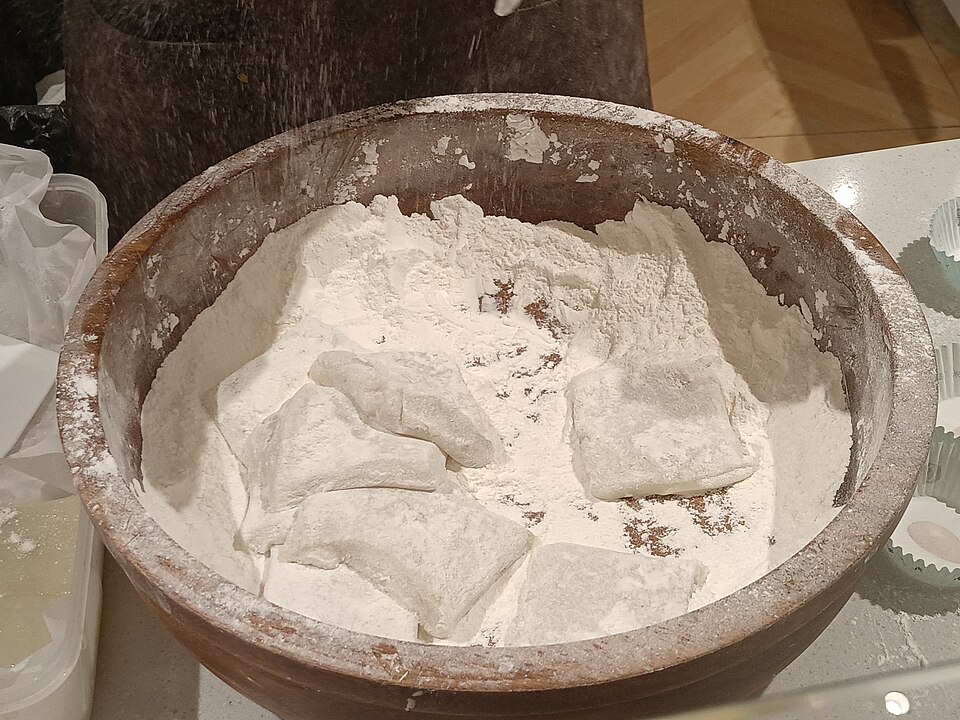
Traditionally, glutinous rice is soaked for about a day and steamed, then pounded in a stone mortar with a wooden or bamboo pestle until smooth. Most factories now use pounding machines. Some makers start instead from rice milk (米漿), which can take hours to prepare. The dough is pinched into pieces, then rolled in powder or wrapped round a filling.
How to eat it
Handmade mochi keeps badly, so eat it the day it is made; boxed, longer-life mochi is the souvenir kind. Warm mochi usually comes with a choice of coating, often peanut or sesame, so say which you want, and eat it soon after it is served.
Around Taiwan
- Kaohsiung
- In Yancheng, A-Mian Mochi (阿綿麻糬) fills its mochi with named Taiwanese produce such as Beigang peanuts, Dajia taro and Wandan red beans. Lao Chou (老周冷熱飲) on Sanmin Street serves warm mochi in peanut or sesame powder.
- East
- Hualien is known across Taiwan for mochi. The Tseng Chi brand grew from a Hakka hawker's handmade cakes, and A-Mei Mochi built its business on the Amis cake 都倫, using red millet from Taibalang (太巴塱) in Guangfu.
- Hakka
- Hakka speakers call it 粢粑. Hakka mochi is often dusted with peanut, sesame or soybean powder.
- Indigenous
- The Amis call their glutinous rice cake 都倫. A Hualien firm made it, together with local millet, the basis of its souvenir mochi.