What it is
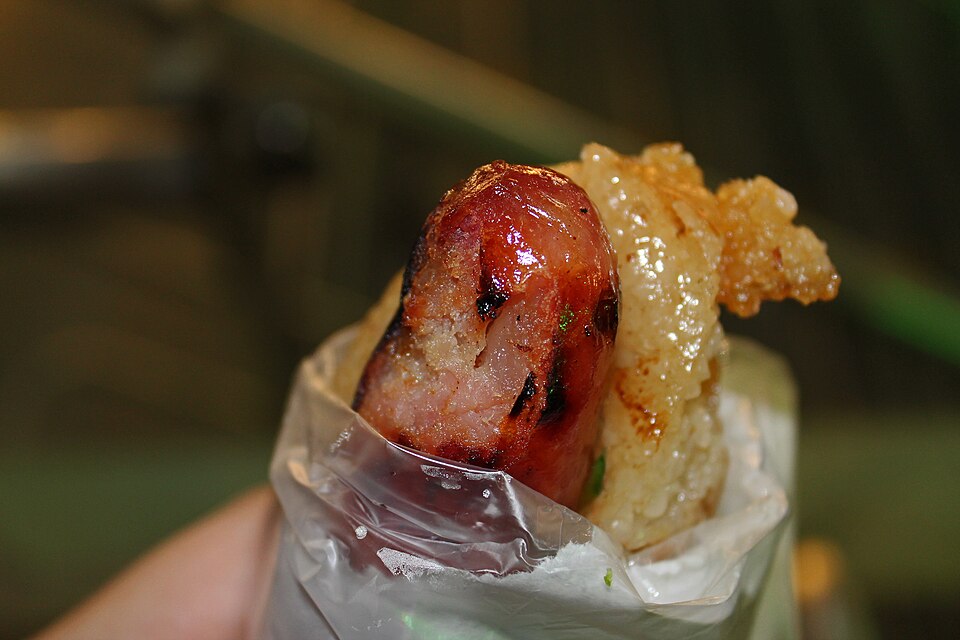
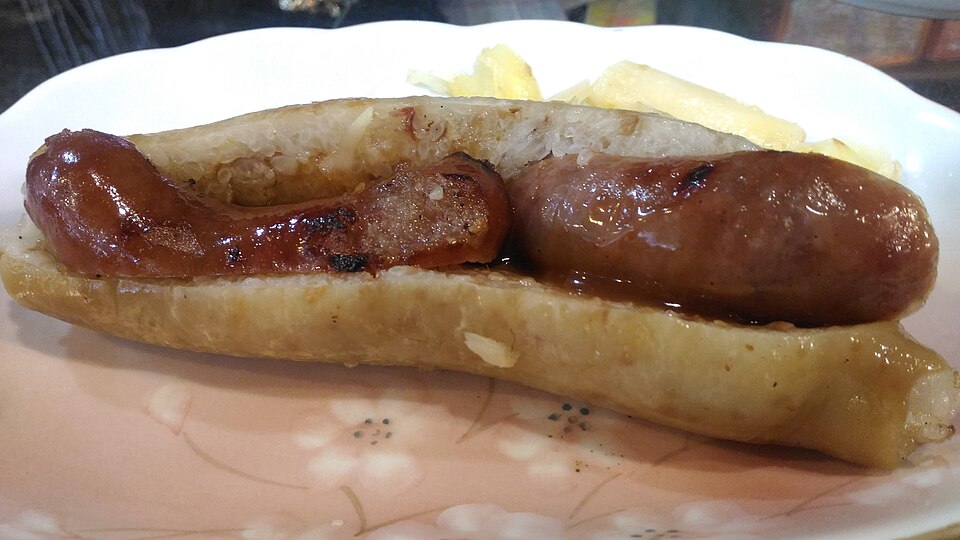
The name means "big sausage wraps small sausage". A sticky-rice sausage (糯米腸), glutinous rice packed into casing, is grilled, split lengthways and used as the bun. Inside goes a smaller grilled Taiwanese pork sausage with raw garlic, pickled mustard greens and thick soy paste. The chef André Chiang (江振誠) has likened it to a Taiwanese submarine sandwich.
Where it came from
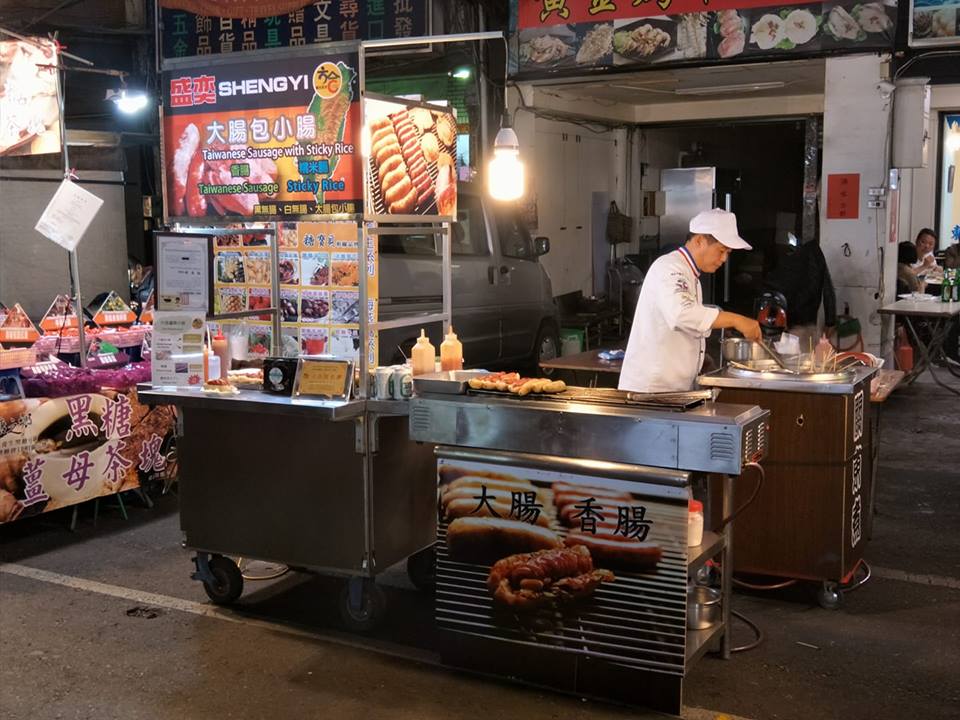
It is a fairly recent invention, dated to the late 20th century. One unsourced account says it began as a snack that Hakka people in Hualien took to work. It caught on in Taiwan's night markets in the 1990s and is now sold across the island. The name also turns up in a saying linked to the dice games once played between vendors and customers. CNN Travel included it in a list of 40 Taiwanese foods.
How it is made
Both sausages are grilled over charcoal or a stove. The rice sausage is cut open, the pork sausage is laid inside and the whole thing is brushed with soy paste. Extras depend on the stall: garlic, pickled mustard greens, coriander, ground peanuts, Thai basil, black pepper sauce, pickled cucumber, wasabi or chilli.
How to eat it
Eat it hot from the grill. Ask for 大腸包小腸 and pick the extras or sauce you want. Night-market stalls often offer the most extras.
Around Taiwan
- Tainan
- A Hai Taiwanese Oden (阿輝黑輪) in Tainan's South District serves a soft rice sausage with a peanut flavour around a meaty pork sausage. The shop began as a tricycle cart nearly 50 years ago.
- Kaohsiung
- Pai Ku Er Dai (排骨二代) on Cijin splits its rice sausage and packs it with pork sausage, garlic cloves and ginger slices, then adds chilli sauce and soy paste. Orders can be bagged with sauce to eat on the move.