What it is
Fried chicken cutlet (雞排, jī pái), also sold as 香雞排, is a boneless chicken breast flattened into one broad piece, coated, deep-fried and dusted with pepper salt. It is handed over in a grease-proof paper bag, whole or cut into pieces. Hot-Star's cutlets are more than 30 cm across.
Where it came from
Smaller fried chicken bites such as 鹽酥雞 (popcorn chicken) came first, and popcorn chicken stalls were already trading in Taipei in the 1970s. Accounts of the cutlet's own start differ. Chinese Wikipedia puts it in the late 1990s. The National Animal Industry Foundation (中央畜產會) goes further back, to a Taipei food cart called 鄭姑媽小吃店 that served students outside vocational high schools in the 1980s. It used breast meat because it was cheaper than leg, which kept prices low, and its first cutlets were marinated with Chinese herbs before frying. A 2006 Council of Agriculture campaign named the cart's owner, Cheng Kuang-jung (鄭光榮), as the originator.
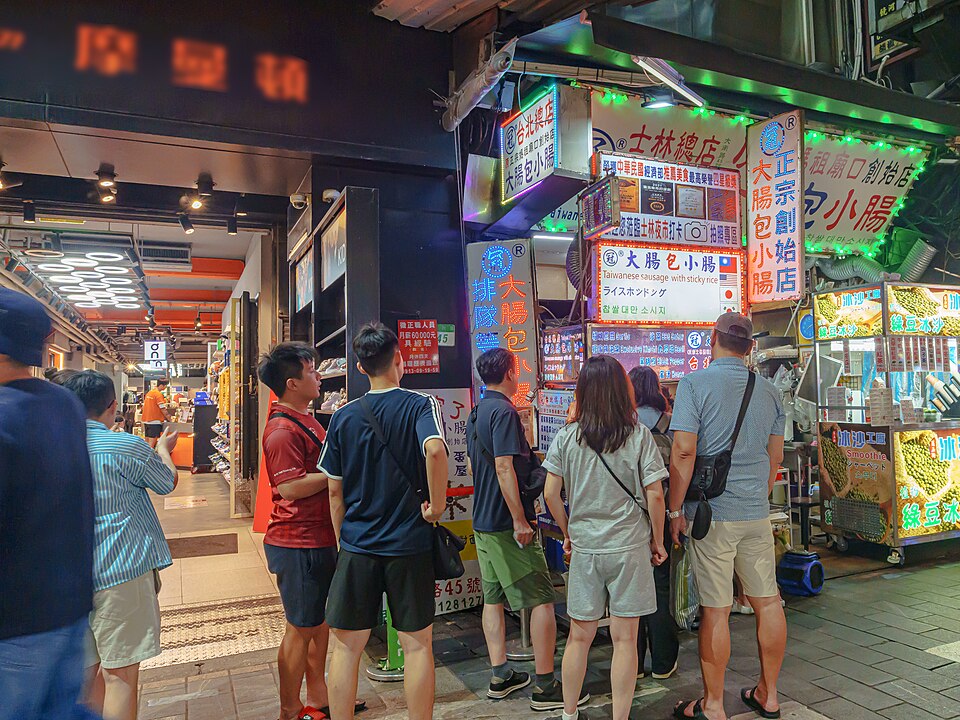
For decades the usual coating was sweet potato starch. The chain 3Q is credited with the crispy-skin style from 1998. Hot-Star (豪大大雞排), which reportedly based its marinade on a Taichung stall's, opened at Shilin Night Market in 1992 and drew long queues with its oversized cutlets. It later opened branches in Hong Kong, Southeast Asia, Australia and North America, but closed its mainland Chinese shops at the end of 2024. Apple Daily once estimated that Taiwan gets through 250,000 cutlets a day.
How it is made
The breast is split and opened out into a thin, even sheet. It is marinated with garlic, ginger, spring onion and five-spice, plus the soy paste (醬油膏) and rice wine that mark the Taiwanese version. Traditional stalls press it into sweet potato starch, which is stickier than potato starch or flour and gives a crisper coat. Others use batter or breadcrumbs. Many fry it in two stages: hot oil to seal the outside, then cooler oil to cook the meat through. Pepper salt goes on at the end.
How to eat it
It is a night-market snack, eaten straight from the paper bag. Order it cut (切, qiē) or whole (不切, bù qiē), and say how spicy (辣, là) you want it. Besides pepper salt, seasonings include chilli, seaweed and plum powders. Cheese-filled and honey-glazed versions are common.
Around Taiwan
- North
- Taipei has both the Cheng family cart, named in 2006 as the cutlet's originator, and Shilin Night Market, where Hot-Star built its oversized cutlet into an international chain. In a 2017 EzTravel survey, cutlets came second among night-market snacks, after popcorn chicken, and first with foreign visitors.