What it is
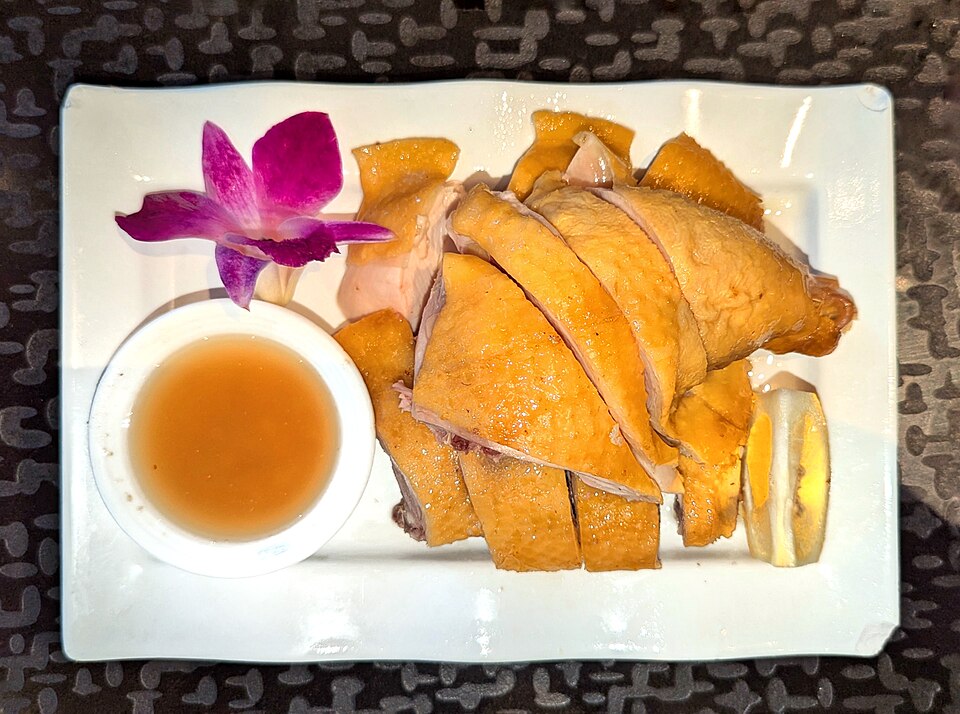
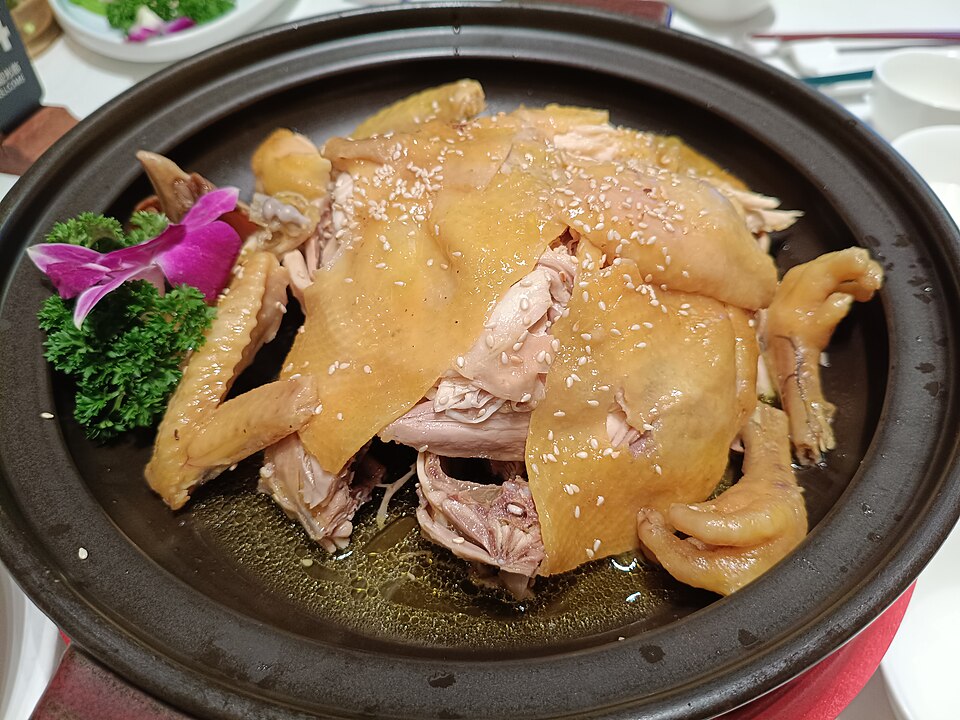
Salt-baked chicken (鹽焗雞) is counted as a Hakka dish. Guk (焗) is the Cantonese term for this kind of sealed cooking. The bird cooks buried in heated salt. Sand ginger (沙薑), a peppery root of the ginger family, flavours the best-known version. The chicken is served torn into shreds or cut into pieces.
Where it came from
The usual story places its start in Huizhou, in Guangdong, during the Qing dynasty. Salt merchants there were wealthy, and their cooks stored leftover cooked chicken in piles of salt, rinsing it off before eating. A home version, lightly cured in salt, became Hakka salted chicken (客家鹹雞). In Guangzhou, cooks wrapped the cured bird in paper and sealed it in salt to cook. This is now called the old method (古法).
In the 1940s a salt merchant opened Ning Chang Restaurant (寧昌飯店) near Guangzhou's City God Temple. Baking took too long, so the restaurant is credited with poaching the chicken and tearing it into pieces, the version known as Dongjiang salt-baked chicken (東江鹽焗雞).
In Taiwan, the cookbook author Huang Su-huei (黃淑惠) introduced a simpler home method in 1980. The bird is wrapped in rice paper or parchment and baked, or boiled or steamed and then pan-fried until the skin crisps.
How it is made
In the old method the chicken is cleaned and air-dried. Salt and sand ginger are rubbed into the cavity, and the bird is wrapped in straw paper. It is buried in salt that has been stir-fried until hot, then cooked over low heat for about half an hour. Many kitchens now poach, steam or oven-bake it instead. Some chefs seal the bird in lotus leaf before it goes into the salt.
How to eat it
It comes as a plate to share, torn or chopped with the skin on. Some shops sell it by the half bird. Others serve it with the chicken's own juices for dipping or spooning over.
Around Taiwan
- Kaohsiung
- Ke Peh (雞伯燒酒雞), whose name means Uncle Chicken, uses free-range hens from Tainan. Its salt-baked chicken is made to order and arrives golden, with crisp skin and the bird's juices alongside.