What it is
The belly (虱目魚肚) is the fattiest and softest part of the milkfish, so in Taiwan it is sold as a cut of its own. Braised (滷), it turns rich and tender while keeping the fish's natural sweetness. Congee shops serve it as a small plate next to milkfish congee and soup.
Where it came from
Milkfish (虱目魚, sat-ba̍k-hî in Taiwanese) is farmed in ponds along Taiwan's southwest coast, from Yunlin down to Pingtung. Farming methods are thought to have come from Indonesia with the Dutch in the 17th century. A popular legend credits the name to Koxinga (鄭成功): offered the fish, he supposedly asked in his Quanzhou accent what fish it was, and his question, which sounds like sat-ba̍k, became its name.
The fish is full of fine bones, so farmers in the south usually send it to processing plants to have them picked out. The belly then reaches congee shops as one boneless piece. Tainan is the largest producer, with about 4,980 hectares of ponds and around 24,000 tonnes a year.
How it is made
Braising (滷) means simmering slowly over low heat in a liquid based mainly on soy sauce, with other seasonings and spices, until the food takes on the flavour. Milkfish belly is also pan-fried, grilled, red-cooked or simmered in soup and congee. A small, especially fatty piece by the belly fin, sold as the milkfish "navel" (虱目魚臍), is braised or red-cooked too.
How to eat it
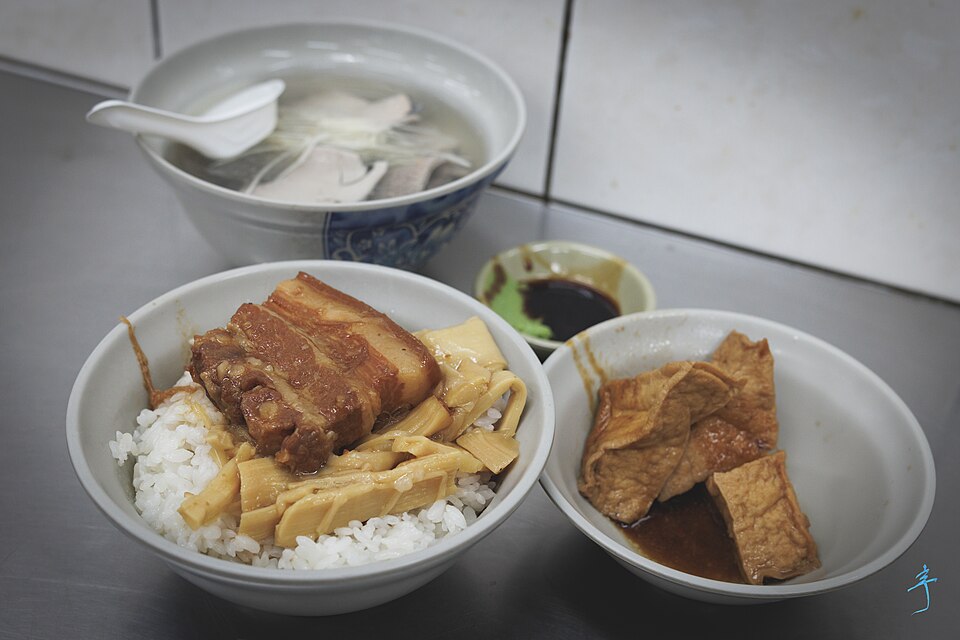
Milkfish congee is a breakfast dish in Tainan, and some congee shops open very early. Order a plate of braised belly to share with the congee or a bowl of braised pork rice. Freshness matters: fish for the local trade is netted at night or before daybreak and sent straight to the nearest market.
Around Taiwan
- Tainan
- Chuan Chia Congee (傳家鹹粥) in Anping takes its milkfish fresh from the port every day, and Michelin inspectors single out its braised belly for its soft, oily flesh. Most of Tainan's milkfish ponds lie in Cigu, Annan, Beimen, Xuejia and Jiangjun districts.
- Kaohsiung
- Kaohsiung is the second-largest producer, with roughly 14,000 tonnes of milkfish a year, most of it from Mituo and Yong'an on the coast.