What it is
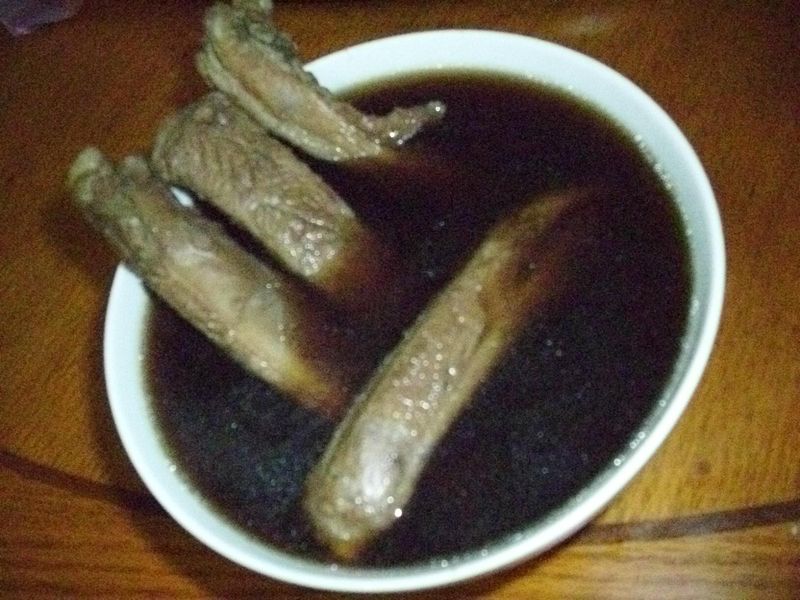
Herbal pork rib soup (藥燉排骨, yaodun paigu) is a bowl of tender pork ribs in a dark broth flavoured with Chinese herbs and rice wine. The broth is often slightly sweet, with a gentle herbal aroma. Stalls sell it by the bowl, sometimes topped with a heap of shredded ginger.
Where it came from
Herbal pork ribs have long been eaten in Taiwan as tonic food (進補, jinbu), but no single inventor is credited. The herbs come from Chinese medicine. Four of the most common, angelica (當歸), chuanxiong (川芎), prepared rehmannia (熟地) and white peony root (白芍), together make up the Four Substances Decoction (四物湯), a blood tonic listed in a Song dynasty pharmacopoeia. Today the soup is mostly sold at night markets. The Chen Dong stall (陳董藥燉排骨) at Raohe Night Market in Taipei bills itself as the market's first herbal stew shop. Some vendors sell a ten-herb version known as shiquan (十全) ribs.
How it is made
The ribs are cut into chunks and blanched to clear away blood and scum. They then simmer with the herbs, rice wine and water, ideally in clay or ceramic pots. Each vendor keeps its own blend, and some stalls claim fifteen or more herbs. Goji berries, cinnamon twig, red and black dates, codonopsis and ginseng rootlets are common. Rehmannia darkens the broth. Herbs left in too long turn the soup bitter, so home cooks tie them in a cloth bag and lift it out.
How to eat it
Eat it hot, usually in the evening at a night market and above all in the cool months. A bowl of braised pork rice (滷肉飯) or noodles makes it a meal. Some stalls offer a dip for the meat, such as chilli bean paste (辣豆瓣醬) or fermented tofu sauce. Herbal lamb (藥燉羊肉) is often on the same menu.
Around Taiwan
- North
- Taipei's large night markets each have a long-running stall. Chen Dong at Raohe sells only herbal ribs, herbal lamb and braised pork rice. Hai You (海友十全排骨) has served its ten-herb ribs for decades from a row of clay jars on its counter.