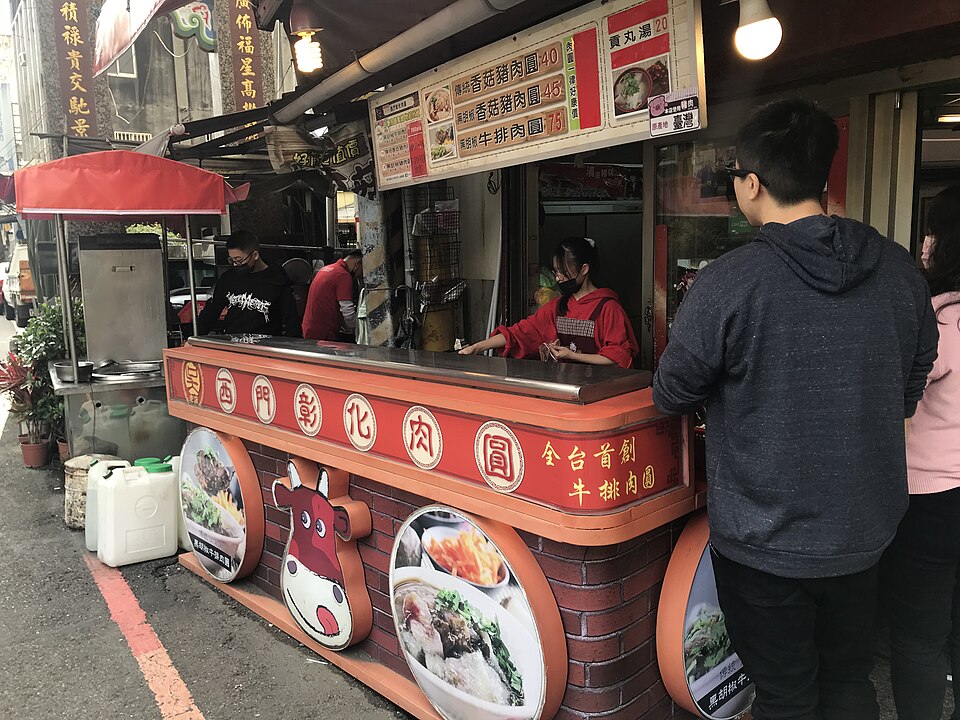
What it is
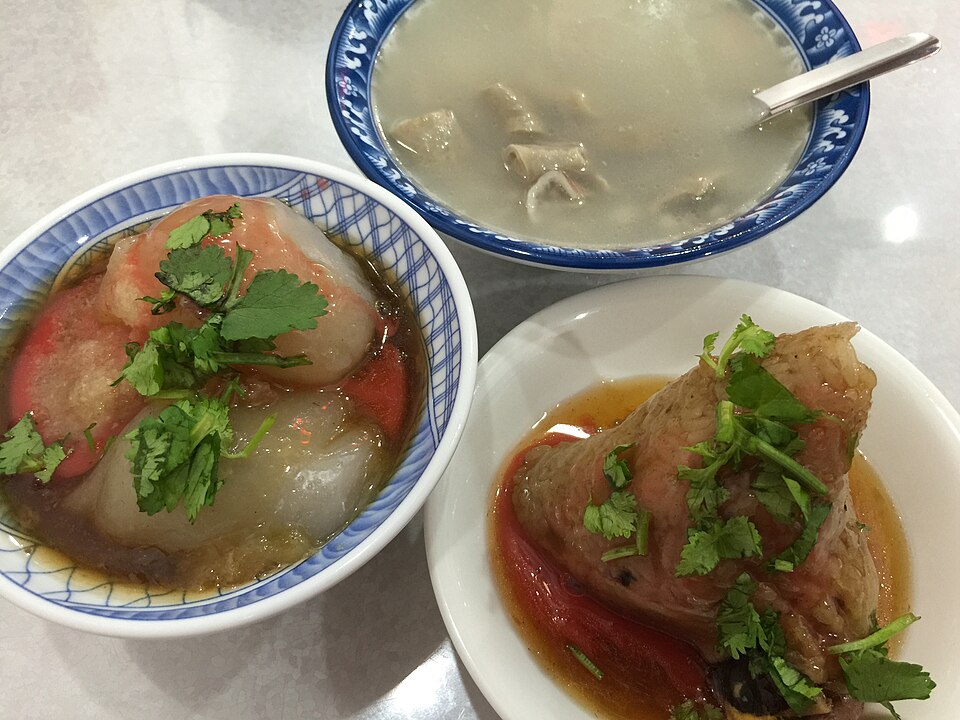
Ba-wan (肉圓) is a flat, round dumpling, usually 6 to 8 cm across, with a chewy, see-through wrapper of starch, often mixed with rice batter. The usual filling is pork with bamboo shoots, often with shiitake, and it comes in a sweet-savoury sauce. Depending on the region it is steamed, held in warm oil or deep-fried until the skin crisps.
Where it came from
The best-known origin story is a legend from Changhua County. After a great flood in 1898, firewood was soaked, stoves were wrecked and sweet potatoes were nearly all people had. Fan Wan-chu (范萬居), a spirit medium and temple scribe, is said to have written down a recipe while possessed by a deity: a cake of sweet potato starch and vegetables, fit for offerings and for relief.
The Fan family in Beidou tells it a little differently. Fan first steamed plain cakes of sweet potato starch for hungry worshippers. The next generation added fillings, fried them and pinched them into the small triangular shape Beidou is still known for. A fourth-generation descendant now runs the family business.
The food writer Li Nai-hao (李廼澔) counts ba-wan among the few snacks born and developed wholly in Taiwan. He dates the steamed style to Chaozhou in Pingtung some 70 to 80 years ago, from where it spread north to Kaohsiung and Tainan. He also rejects the popular rule of 'steamed in the south, fried in the north', noting that oil-poached ba-wan are standard in Yunlin and Chiayi.
How it is made
The wrapper was traditionally pure sweet potato starch. Today the starch is often mixed with other starches or with batter made from in-lai, a long-grain rice, and some Pingtung shops use rice batter alone. In Beidou the batter is pressed into small cup moulds around the filling. Most ba-wan are steamed first. Many shops then keep them in warm oil or fry them crisp; in Pingtung they soak in hot braising sauce instead.
How to eat it
A snack or light meal at any hour. A bowl of soup usually comes alongside: many shops offer free pork-bone or bonito broth, and sishen soup (四神湯), a herbal soup, is on almost every menu. Garlic paste, coriander or celery may go on top. Small ba-wan are ordered by the handful.
Around Taiwan
- Tainan
- Tainan steams two kinds, one with chunks of pork and the shrimp ba-wan (蝦仁肉圓) with braised pork and fresh shrimp, and fries a small original. Shops compete on pork, shrimp and sauce. Soy sauce with wasabi and garlic is a common dip.
- Kaohsiung
- In Fengshan, shops along Ruizhu and Ruixing roads have earned the area the nickname ba-wan street (肉圓一條街). The local speciality is a bite-sized, pearl-style ba-wan, wrapped and steamed to order, which customers buy ten or more at a time.
- North
- Jiufen in New Taipei makes red-lees ba-wan (紅糟肉圓), deep-fried and filled with pork hind leg steeped for three to four days in fermented red rice lees. Hsinchu shops tend to poach theirs in oil.
- Central
- Changhua is where ba-wan is said to have begun. Beidou's are small and triangular, with three pinch marks. Lukang calls the dish bah-hôe (肉回), after the character 回 that its blocky shape resembles. Taichung Rou Yuan (台中肉員) has traded since 1933.
- South
- Pingtung is where the steamed style appears to have started. After steaming, its ba-wan wait in hot braising sauce and come three to a bowl with garlic paste, celery and coriander. Oil-poached ba-wan remain the norm in Chiayi.