What it is
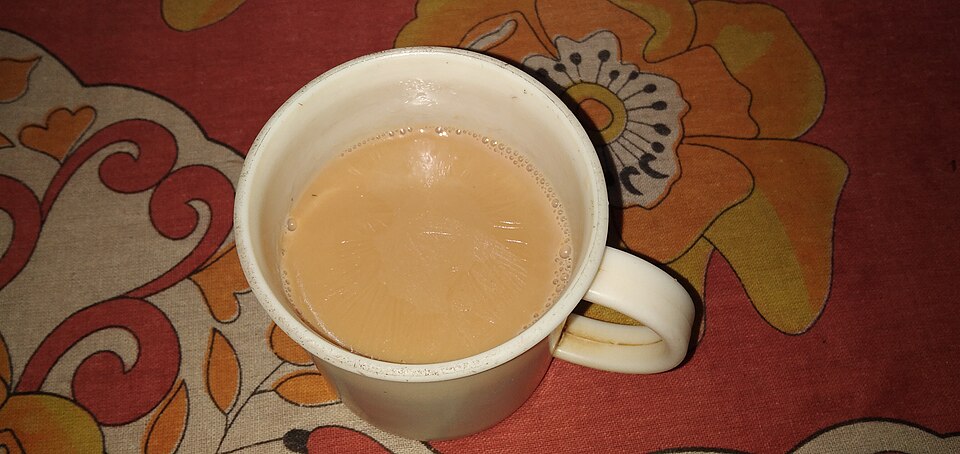
Almond tea (杏仁茶, xingren cha) contains no tea and, made the old way, no almonds either. Its base is apricot kernels, mainly the sweet southern kind (南杏, nan xing), ground and thickened with rice into a smooth, creamy drink with a strong, distinctive scent. Street stalls and old breakfast shops across Taiwan sell it hot.
Where it came from
Apricot kernel drinks grew out of Chinese medicine, where infusions of this kind were taken from at least the Song dynasty.
In Taiwan the drink was already everyday food under Japanese rule. A recollection of Shilin Market in 1914, published in the magazine Minzoku Taiwan (民俗台灣), describes almond tea with 油車粿, an old name for fried dough sticks, as a handy breakfast in eating houses. The food culture scholar Chen Yu-jen (陳玉箴) describes 1930s night vendors calling "tea, tea" through the streets and selling it with fried dough.
It also reached grand tables. Almond tea was among the desserts served to the Japanese Crown Prince Hirohito on his 1923 tour of the island. In 2004, almond tea with fried dough was on the menu of the state banquet that followed President Chen Shui-bian's re-election.
One Taiwanese family memory, recorded by the food historian Rachel Laudan, holds that almond tea was once as common as soy milk became in the second half of the twentieth century.
How it is made
The kernels are soaked until soft, then ground with water and strained to give a milky liquid. This is brought to the boil with sugar, and rice, either ground or cooked in with the kernels, thickens it. The pot needs constant stirring so it does not catch. Some makers use brown rice for a stronger grain flavour. The bitter northern kernel (北杏, bei xing) contains natural cyanide, so recipes leave it out or limit it. Some vendors take a shortcut with ready-made powder.
How to eat it
It is a breakfast and late-night drink, and most welcome in winter. The classic order is a set (一組) of almond tea with a fried dough stick (油條, youtiao) for dipping. Some stalls will beat a raw egg or an egg yolk into the hot tea, which makes it thicker and richer. It is served hot and drunk before a skin forms.
Around Taiwan
- South
- In Chiayi, a family stall beside the Nanmen roundabout (嘉義南門包氏炭燒杏仁茶) has sold almond tea for more than 80 years, kept warm over charcoal. Most customers order it with fried dough, and the owner can whisk an egg yolk with a pinch of salt into the cup.